
A Coup, A Capture, And A Giant Oil Question
In a single night, the global oil market gained a huge new source of uncertainty. U.S. special operations forces struck Caracas, seized Venezuelan president Nicolás Maduro and his wife, and began flying them to New York to face long standing drug trafficking and narco terrorism charges. President Donald Trump has not only claimed credit for the operation, he has also declared that the United States will “run” Venezuela until a “safe, proper and judicious transition” can be arranged.
This is not just a political drama. Venezuela sits on roughly 300 billion barrels of oil, the largest proven reserves on earth, but much of it is trapped behind decades of mismanagement and decaying infrastructure. Current production of around 800,000 to 900,000 barrels per day is a fraction of the 3.2 million barrels per day the country pumped in 2000. Now traders have to decide whether this shock will tighten supply in the short term, or eventually unleash a flood of new barrels under American control.
What Just Happened To Venezuela’s Oil Sector?
Early reports from state oil company PDVSA say that production and refining facilities remain mostly intact, although the port of La Guaira has taken “severe damage” and there are fires and smoke around major military sites such as La Carlota air base and Fuerte Tiuna. That means the wells and upgraders may still function, but the export system is fragile at best.
At the same time, Trump has ordered a hard embargo on Venezuelan oil. A naval “blockade” announced in December had already choked off most sanctioned tankers. Chevron charters were among the few ships still loading crude. Now Trump says the embargo “remains in full effect” and boasts that “the American armada remains poised in position” until U.S. demands are met.
Politically, the situation is even more volatile. Trump claims that vice president Delcy Rodríguez has been sworn in and is “willing to do what we think is necessary,” but opposition leaders insist that Edmundo González won the disputed 2024 election and that a real transition must put him and María Corina Machado at the center. Analysts warn that Venezuela could move toward a negotiated democratic transition, a quiet elite handover, or a descent into guerrilla conflict with armed colectivos and narco linked factions. Each path has very different consequences for oil.
Who Will Rebuild Venezuela’s Broken Oil Machine?
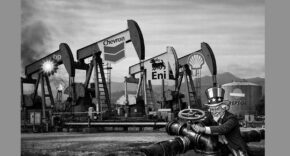
Trump has been blunt about his plan. He told reporters that “very large United States oil companies, the biggest anywhere in the world” will go in, spend “billions of dollars,” fix “the badly broken oil infrastructure,” and “start making money for the country.”
On the ground, that likely starts with Chevron, the only U.S. major still operating in Venezuelan fields and exporting heavy crude to Gulf Coast refineries under tightly controlled licenses. Energy expert Francisco Monaldi notes that Chevron is “immediately positioned to benefit the most” from any opening, since it already has staff, assets, and long experience in the Orinoco Belt.
Other U.S. giants are circling. ConocoPhillips is owed more than 10 billion dollars after its projects were nationalized by Hugo Chavez almost twenty years ago. Monaldi argues that Conoco is “very interested in going back” because it is unlikely to recover that money without reentering the country. ExxonMobil may also return, even though it is owed less, because heavy Venezuelan crude is still valuable for U.S. refineries that are built around that feedstock.
Behind them stand the oilfield service companies that actually make production possible. Firms like SLB, Baker Hughes, Halliburton, and Weatherford would be essential to restart drilling, repair upgraders, and bring new wells online.
But respected analysts warn that none of this will be quick or easy. Peter McNally of Third Bridge says it will take “tens of billions of dollars” and “at least a decade” of sustained investment by Western majors to really turn the industry around. Energy adviser David Goldwyn stresses that everything depends on “who governs the country,” what the transitional government looks like, how secure the oil regions are, and how Washington rewrites the sanctions and licensing regime. Until there is a clear legal framework, a stable security environment, and clarity on who controls the central bank and oil revenues, many companies will hesitate.
Short Term: Volatility, Risk Premiums, And A Possible Supply Squeeze
In the immediate aftermath, the oil market is bracing for turbulence. Before the raid, Venezuela was exporting around 921,000 barrels per day. Much of that flow is now in doubt. One key port is damaged, the military is on edge, refugees may soon pour across borders, and Colombia and other neighbors are already moving troops in response to what they call an “assault on sovereignty.”
At the same time, Trump has doubled down on the embargo and kept the naval blockade in place. Tankers that do load Venezuelan crude risk inspection or seizure. China, which has relied on “debt for oil” deals with Caracas, now faces serious uncertainty about whether those barrels will keep flowing. Russia and Iran have condemned the operation as “armed aggression” and a violation of international law.
For traders, that combination spells a higher risk premium. They must price in several dangers at once:
- The chance of a Venezuelan civil war that shuts in production and leaves as much as 300 billion barrels effectively stranded.
- The possibility that sabotage, looting, or fighting will damage fields and upgraders that are already in poor condition.
- The risk of wider regional clashes or retaliatory moves by Russia and Iran that could affect other supplies.
As Michael Kern notes, markets can expect “a massive spike in volatility” as they weigh the risk of conflict against the potential for a “Chevron led” recovery. In practical terms, that likely means higher prices and sharp intraday swings in the coming days and weeks. Even if the actual loss of Venezuelan barrels is small at first, fear and uncertainty can push futures higher as funds rush to hedge.
Longer Term: Three Big Paths For The Oil Market
Over the longer term, the future of oil prices depends on what kind of Venezuela emerges from this shock. Experts sketch out three broad scenarios.
1. A managed transition and a controlled flood of new barrels
In the best case, Maduro’s capture leads to elite defections and a negotiated handover to the opposition leadership that many Venezuelans and international observers view as legitimate. The United States uses its leverage to push for free and fair elections, gradual sanctions relief, and a clear legal framework for foreign investment.
In that environment, Chevron and other U.S. majors could steadily ramp up drilling in the Orinoco Belt. Oilfield service companies would pour in, and tankers would once again line up at Venezuelan terminals, this time with payments flowing into accounts controlled by a transitional government.
If this happens, the medium to long term effect on global oil markets could be a significant increase in heavy crude supply. Over a decade or more, production could move back toward historical levels, easing tightness in complex refinery systems that depend on heavy grades. Prices might soften compared to a world where Venezuelan reserves stay locked away, especially if other sources are stable.
2. A slow, messy comeback with unstable politics
A more likely scenario, according to many analysts, is a drawn out struggle in which Delcy Rodríguez, remnants of the ruling party, opposition leaders, and local power brokers all jockey for control. Violence may flare in some regions, but not enough to collapse the state. The United States “runs” parts of the system and provides security for key oil assets while debating how quickly to hand power back to Venezuelans.
In this case, Chevron could cautiously expand operations, but Exxon and Conoco might hold back until contracts and security look solid. Washington might allow more exports, but keep revenues partly in blocked accounts to pressure local actors.
For global markets, this would mean a modest increase in Venezuelan flows over time, but nothing like the full potential of the reserves. Prices would reflect a lingering “Venezuela risk discount” on future supply, keeping a floor under crude even as more barrels reenter. Volatility would remain elevated whenever negotiations break down or violence spikes.
3. Fragmentation and a long term supply cap
The darkest scenario is one in which regime remnants, colectivos, criminalized military units, and guerrilla factions refuse to negotiate. The state fragments. Some regions fall under cartel control. Pipelines and ports become targets.
In that world, oil companies simply cannot operate. No amount of U.S. rhetoric or naval power can create the on the ground security required to move tens of billions of dollars of equipment and people. Much of Venezuela’s oil stays underground for years, maybe decades.
Global markets would then treat Venezuela as a lost giant. The International Energy Agency has long called the country a “wildcard,” and in this scenario the card never comes back into the deck. That would keep global supply tighter than it otherwise would have been, support higher prices, and increase the importance of other producers.
How U.S. Oil Companies Stand To Gain
Even with all this uncertainty, it is clear who is best positioned to profit if Venezuela stabilizes under U.S. guidance.
- Chevron already exports about 150,000 barrels per day from Venezuela and has kept crucial staff and infrastructure in place through years of sanctions and shifting licenses. If security improves and sanctions ease, it can scale up faster than anyone else.
- ConocoPhillips has powerful financial incentives to return, since it is owed over 10 billion dollars. The most realistic way to recover that money is to take stakes in new projects or reclaim old ones under a new legal framework.
- ExxonMobil has a long history in the country and a deep need for heavy oil to supply complex refineries. Even though it is owed less than Conoco, the strategic fit is strong.
- Service companies such as SLB, Baker Hughes, Halliburton, and Weatherford would see a surge of contracts for drilling, workovers, seismic surveys, and equipment replacement if a large scale rebuilding effort begins.
Monaldi notes that these three majors “are not going to be worried about investing in heavy oil” because it remains “very much needed in the United States” and they have shifted less aggressively toward decarbonization than some European peers. European firms may hesitate in the Orinoco Belt, leaving even more room for U.S. companies.
Predictions: What The Experts Are Saying
Across think tanks, trading desks, and energy consultancies, a few common themes are emerging.
Jason Marczak at the Atlantic Council calls this “the most consequential moment in recent Venezuelan history” and stresses that the U.S. military operation is “the start, not the end” of a new level of engagement. That means the United States now “bears responsibility” for the eventual outcome, including whether the oil sector becomes a tool for democratic recovery or a source of fresh corruption.
David Goldwyn argues that opening Venezuela’s energy industry “will come down to the details” of governance, sanctions, licensing, and revenue management. Until companies see a reliable legal and fiscal regime and a secure operating environment, they will limit their exposure.
Peter McNally highlights the scale and time frame. The industry will need “tens of billions of dollars” and “at least a decade” of Western commitment to reach its potential. There is no quick fix that would suddenly flood the market with Venezuelan crude next year.
Analysts at the Atlantic Council also warn that success will require “years long” U.S. diplomatic and economic efforts, not just a dramatic raid. That includes building credible institutions, supporting free elections, and managing expectations among Venezuelans who have already endured one of the largest peacetime refugee crises in modern history.
Meanwhile, geopolitical experts such as Alexander Gray see the operation as a message to Beijing and Moscow. By removing Maduro and promising to “run” Venezuela, Washington is trying to sever a major energy lifeline for China and roll back Russian influence in the Western Hemisphere. For oil markets, that suggests a long term shift in where Venezuelan barrels go if and when they return: away from Chinese debt repayments and toward U.S. controlled flows.
The Bottom Line For Oil
In the short term, the capture of Maduro and Trump’s promise to “run” Venezuela are bullish for oil prices. Damage to port infrastructure, a tight embargo, potential unrest, and furious reactions from Russia, China, Iran, and regional leaders all raise the risk that Venezuelan supply will be disrupted rather than increased. Volatility is likely to spike as traders react to every rumor from Caracas and Mar a Lago.
Over the longer term, the picture is more complicated. If the United States can engineer a stable transition, rewrite sanctions, and attract tens of billions of dollars of investment from Chevron, Conoco, Exxon, and others, Venezuela could gradually transform from a failing petro state into a major, U.S. aligned supplier of heavy crude. That would be a slow process measured in years and decades, not weeks.
If, however, politics in Caracas stay chaotic or collapse into conflict, the world’s largest oil reserves will remain a sleeping giant. In that case, today’s dramatic raid will be remembered not as the starting gun for a new oil boom, but as the moment when one of the great “what ifs” of global energy slipped even further out of reach.
FAM Editor: Keep in mind that Saudi Arabia supports a large welfare state, they are most comfortable with oil prices of about $80 per barrel, and are sanguine at $60. If the prices start to fall towards $40 per barrel, Saudi Arabia will begin to use up its cash reserves and when they run out (2-3 years…), they will face insurrection.
Europe is experiencing severe energy shortage because of poor planning and issues with Russia, so new routes from Venezuela could make Europe much stronger and perhaps even allow them to start moving production back to the continent.
These are only a couple of the many issues connected to oil price fluctuations and the liberation of Venezuela.
Our prediction is that this is a rough, unpredictable road, interruptions in the short term, and lower prices in the long term seem likely, but the political football that is the U.S.-China relationship will drive short term turmoil.