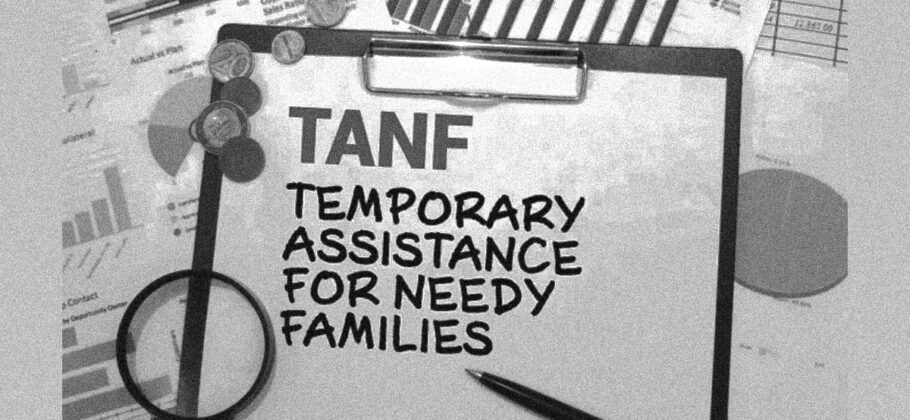
According to a detailed investigation by The Wall Street Journal, a federal welfare program designed to help America’s poorest families has quietly turned into a $30 billion pool of money that states can use with little oversight and few consequences. The program, known as Temporary Assistance for Needy Families, or TANF, now sits at the center of a growing bipartisan fight over fraud, waste, and the basic question of who the money is really helping.
Originally created as a cornerstone of welfare reform, TANF was meant to push families toward work and stability. Instead, audits and federal investigations show the program has drifted far from its original purpose, becoming what critics openly call a “slush fund” for state governments.
TANF was created in 1996 as part of a sweeping welfare overhaul signed by President Bill Clinton, who famously said the reform would “end welfare as we know it.” The law replaced the old Aid to Families with Dependent Children program and gave states fixed block grants to support needy families.
Under federal law, TANF funds are supposed to do four main things: help children stay in their homes, promote work and job preparation, reduce out-of-wedlock pregnancies, and encourage two-parent families. The program provides $16.5 billion a year in federal funding, matched by roughly $15 billion in state funds, putting the total annual pot above $30 billion.
But unlike other safety-net programs, TANF comes with minimal reporting requirements. States receive the money in block grants and are given broad discretion in how they spend it.
Who Actually Receives the Money
Despite its size, TANF now reaches far fewer families than it once did. Federal data shows that in fiscal year 2025, an average of about 849,000 families received direct cash assistance each month. That is less than half the roughly 1.9 million families who received aid in 2010.
Nationwide, only about 20 percent of families living in poverty receive TANF cash assistance. Benefit levels are often extremely low. In 2024, the maximum monthly payment for a family of three ranged from just $204 in Arkansas to $1,370 in Minnesota.
Nick Gwyn of the Center on Budget and Policy Priorities said the program has lost its focus. “The program has drifted away from the core purpose of supporting families with very little income,” he said.
How Oversight Broke Down
The Wall Street Journal found that weak oversight is not limited to one party or region. Auditors in states run by both Republicans and Democrats have uncovered widespread problems, including inaccurate reporting, missing documentation, and money handed to contractors with little tracking of how it was spent.
Last year, the Government Accountability Office identified 37 states where recent audits found 162 deficiencies in financial oversight. Fifty-six of those were labeled severe. The agency criticized what it called “opaque accounting practices” among states and third-party groups receiving TANF funds.
Hayden Dublois of the Foundation for Government Accountability said the system almost invites abuse. “There are very little, if any, safeguards,” he said. Dublois estimates that about one in five TANF dollars, roughly $6 billion a year, is misspent. He summed up the problem bluntly as “fraud by design.”
What States Are Spending the Money On
Audits and investigations show TANF money has been used for programs that have little or no connection to helping poor families get back on their feet.
Examples cited by state and federal records include college scholarship programs that benefited middle- and upper-income students, antiabortion pregnancy centers, a volleyball stadium in Mississippi, and a job-training nonprofit in Ohio whose leaders were later sentenced to prison for using TANF funds on vacations, real estate, and fake salaries.
In Michigan, more than $750 million in TANF funds between 2011 and 2024 went to two college scholarship programs that helped many students from middle-income and affluent families. In Missouri, millions of dollars a year were routed to the state’s Alternatives to Abortion program, including about $12 million in the current fiscal year for 10 providers.
Missouri officials argue the spending aligns with TANF’s goals by supporting families during pregnancy and after childbirth. Critics say it is a misuse of funds to advance a political agenda.
Using TANF to Plug Budget Holes
Because states are not required to spend all their TANF money in a single year, many have built up large surpluses. During periods of fiscal stress, such as the 2007 to 2009 recession, states increasingly used TANF funds to cover unrelated expenses.
Robert Rector of the Heritage Foundation, who helped draft the 1996 welfare law, said this was never the intent. “Today all states are in de facto violation of the law,” he said, arguing that states no longer focus spending on work and family stability.
Rector said both parties share the blame. “Democrats didn’t want the reforms, and Republicans told their base that they had ended welfare and just closed the book,” he said. “I was flabbergasted.”
Audits Reveal Persistent Failures
State audits show the same problems repeating year after year. A 2024 audit in Louisiana found that state employees failed to verify or document work hours for TANF enrollees, a federal requirement. It was the 13th consecutive year auditors flagged the same issue.
In Connecticut, auditors reported that the state did not properly review financial reports from 131 subcontractors who received $53.6 million in TANF funds, making it difficult to determine whether the money was spent on allowable activities.
Oklahoma state auditor Cindy Byrd said her office regularly finds weak or nonexistent documentation. “There’s just not enough proof showing where the money went,” she said.
The Federal Government Knew and Did Little
The Government Accountability Office has warned about TANF oversight for more than a decade. As early as 2012, it recommended tighter reporting requirements and stronger federal audits. Congress did not act.
In 2016, a federal health official testified that existing law prevented the government from even estimating improper payments in TANF. Republican Representative Gary Palmer of Alabama said at the time, “That doesn’t make any sense to me.”
Palmer now supports legislation to require better reporting. “Just from fiscal responsibility, we have an obligation to do this,” he said.
Trump Administration Turns Up the Pressure
The Trump administration has recently focused on fraud concerns after a major safety-net scandal in Minnesota. In January, it froze roughly $10.6 billion in child-care and family-assistance grants, much of it tied to TANF, in five Democratic-led states: California, Colorado, Illinois, Minnesota, and New York.
The Administration for Children and Families said its concerns were heightened by federal prosecutions and allegations that funds were being diverted away from American families. In Colorado, officials were told the state must provide detailed records of TANF recipients, subcontractors, and oversight mechanisms going back to 2019.
Governor Jared Polis warned that withholding funds could harm needy families, while New York Governor Kathy Hochul said, “We’ll fight this with every fiber of our being because our kids should not be political pawns.”
A federal judge temporarily blocked the administration’s action, and the agency declined further comment due to ongoing litigation.
A Program at a Crossroads
Three decades after it was created, TANF stands as a rare example of bipartisan agreement that has slowly unraveled. Conservatives argue it is riddled with fraud and mission drift. Liberals say it fails to adequately support families in deep poverty.
Ann Flagg, who oversaw TANF under President Joe Biden, said federal officials struggled to control state spending. “Knowing that there were so many layers between the activity on the ground and the federal perch, there were many, many instances, I am sure, that funds were used in crazy ways,” she said.
Despite repeated warnings, Congress has yet to pass meaningful reforms. Until it does, critics say the $30 billion TANF program will continue to operate less as a safety net and more as a loosely supervised slush fund for the states.