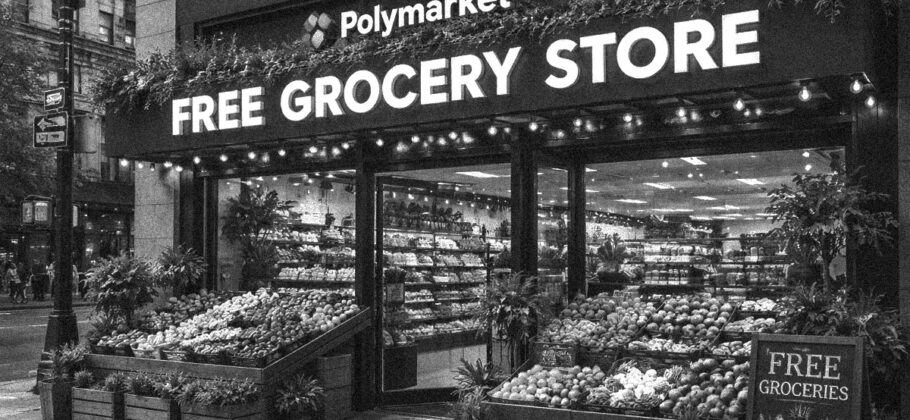
New York City is briefly getting what is being billed as its first free grocery store, but the project is raising as many questions as it answers. The store is not a permanent solution to food costs, nor is it run by the city. Instead, it is a short term pop up created by Polymarket, a cryptocurrency based betting platform better known for allowing users to wager on elections, wars, and global events.
The store, called The Polymarket, is opening in Lower Manhattan at noon on February 12 and is scheduled to close just four days later on February 16. It offers free groceries with no purchase required and no income restrictions. While the company frames the move as a community investment, critics see it as a publicity stunt that highlights the weakness of government driven grocery proposals rather than supporting them.
What Polymarket Normally Does
Polymarket operates as a prediction market, allowing users to bet on the likelihood of real world outcomes. The platform has drawn controversy for hosting bets on war strikes, diplomatic negotiations, and geopolitical crises. Critics have questioned whether some traders could have inside knowledge, especially after reports that individual bettors made millions of dollars predicting sensitive events.
Against that backdrop, Polymarket’s sudden move into food distribution stands out as unusual. The company itself has not explained the decision in detail, declining to respond to Fox News Digital questions about why it is opening what it calls the city’s first free grocery store.
Instead, Polymarket has relied on promotional messaging. In a public announcement, the company wrote, “Free groceries. Free markets. Built for the people who power New York.” The phrasing makes clear that the store is intended as a statement about markets rather than a long term hunger solution.
A Short Term Store With Long Term Headlines
The Polymarket grocery store will be open for only a few days, and even those hours are listed as subject to change. Photos posted online show shelves stocked with basics like produce, milk, eggs, and bread, along with brand name snacks such as Oreos, Pringles, and Sour Patch Kids.
Polymarket said the idea took “months of planning” and confirmed it paid for the lease. The company also donated $1 million to Food Bank For New York City, describing it as “an organization that changes how our city responds to hunger.”
The Food Bank notes that “every $1 provides up to 3 healthy, nutritious, and culturally appropriate meals for families facing food insecurity.” While the donation is significant, critics point out that the grocery store itself will vanish in less than a week, leaving no lasting infrastructure behind.
A Direct Contrast With City Run Grocery Stores
The timing of the announcement is not accidental. New York City Mayor Zohran Mamdani centered his mayoral campaign on opening city owned grocery stores as a way to fight rising food prices.
Mamdani proposed a $60 million pilot program to open five city run grocery stores, one in each borough. According to his campaign, the city would cover rent and property taxes, allowing the stores to sell food at wholesale prices and operate without profit.
“Grocery prices are out of control,” Mamdani said in a campaign video. “The cost of eggs and milk has skyrocketed. It doesn’t need to be this way.”
His campaign cited data from the New York state comptroller’s office showing that food costs in the city rose 65.8% between 2013 and 2023, far faster than overall inflation.
Skeptics argue that Mamdani’s plan ignores the reality of how grocery businesses actually work. Industry experts warn that grocery stores already operate on thin margins and face pressures from supply chain disruptions, labor costs, and global market forces that a mayor cannot control.
Mike Durant, president and CEO of the Food Industry Alliance, said, “Lack of predictability coming out of Washington, D.C. with the tariffs, that’s not anything a mayor can deal with.”
Durant added that grocery stores are often blamed for inflation they did not cause. “The grocery store is the last touch point and they are the public facing entity of that touch point so they are the ones that receive the backlash in times of food inflation or higher costs that is out of their control,” he said.
He also criticized the fairness of the plan, saying, “The idea of using a business’ tax dollars to compete against them is frankly offensive. A lot of these are neighborhood grocers.”
Supporters Push Back, But Questions Remain
Supporters of Mamdani’s plan argue that government intervention is necessary. His spokeswoman Dora Pekec said, “Grocery costs are skyrocketing, leaving New Yorkers stretched thin.”
“We can’t keep ignoring a crisis that’s making the city unlivable for working families,” she said. “Zohran Mamdani has a clear plan: build grocery stores in food deserts that guarantee lower prices so every New Yorker can put affordable, healthy food on the table.”
Former Whole Foods executive Errol Schweizer also defended the concept, saying grocery prices have risen between 30% and 60% in many categories over the past five years. Still, even Schweizer suggested the plan would need to be far larger to work, comparing it to the Department of Defense commissary system.
Mamdani’s Sarcastic Response
Mamdani responded to Polymarket’s announcement with sarcasm rather than outrage. He reposted a satirical Clickhole headline that read, “Heartbreaking: the worst person you know just made a great point.”
The remark suggested that even a crypto betting firm could recognize how expensive groceries have become, while also dismissing the company’s motives.
Publicity Stunts Versus Policy Reality
Polymarket’s move follows a similar stunt by competitor Kalshi, which gave shoppers up to $50 in free groceries at a Westside Market in the East Village. Long lines formed, showing how desperate many New Yorkers are for relief.
But critics say these events highlight the core problem with Mamdani’s plan. Temporary giveaways generate headlines and goodwill without promising results. Government run grocery stores, meanwhile, risk becoming expensive, inefficient, and politically protected failures.
A taxpayer funded grocery store in Kansas City, Missouri, recently collapsed after receiving millions in public dollars, citing crime and lack of profitability.
A Warning Sign, Not a Blueprint
Polymarket’s free grocery store will likely be remembered less as a solution and more as a symbol. It shows how easy it is to give food away briefly and how difficult it is to run grocery stores sustainably.
As the shelves empty and the pop up closes, New York will be left with the same problem it started with. High prices, fragile supply chains, and a mayoral plan that critics warn could cost taxpayers tens of millions of dollars with little to show for it.
For skeptics, Polymarket’s stunt does not support city run grocery stores. It quietly undercuts them
FAM Editor: I keep chuckling to myself, these guys are offering free groceries to rich people. Huh???? This is an excellent publicity stunt – but I’m not sure how to take it…