
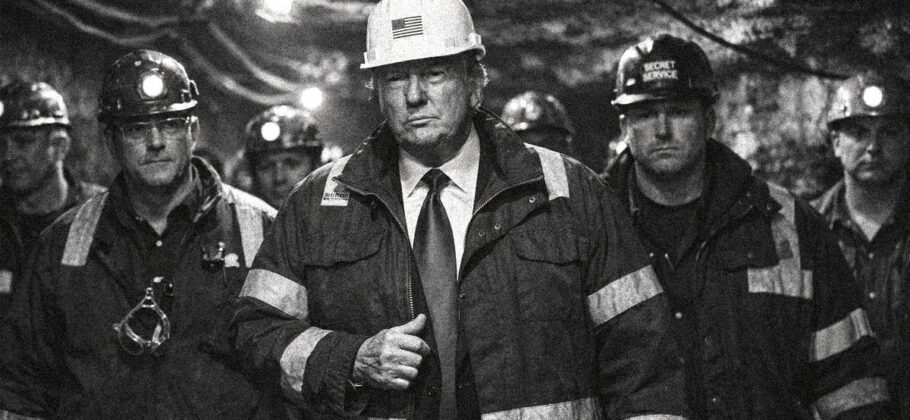
President Donald Trump is once again putting coal at the center of America’s energy strategy. On February 11, 2026, he hosted a “Clean Beautiful Coal” event in the East Room of the White House, calling coal “America’s most reliable and affordable energy source.”
The event, scheduled for 4:00 p.m. Eastern time, brought together Energy Secretary Chris Wright, Environmental Protection Agency Administrator Lee Zeldin, Interior Secretary Doug Burgum, governors, and members of Congress. It was designed to send a clear message that coal is not only back, but expanding under Trump’s leadership.
Trump’s Message: Coal Keeps America Running
At the White House event, Trump praised coal workers and the role the industry plays in powering the country.
“You do so much,” Trump said. “You heat our homes, fuel our factories, and turn natural resources into American riches and dreams.”
He also highlighted what he calls “beautiful, clean coal” as essential for grid stability and economic strength. According to White House Press Secretary Karoline Leavitt, the president planned to explain how coal is “not only keeping the lights on but also driving down the cost of electricity across our country.”
White House spokeswoman Taylor Rogers said, “Beautiful, clean coal is critical to ensuring American families and businesses have the energy they need, while simultaneously driving down electricity costs across the country. President Trump’s commonsense approach is unleashing America’s most reliable and affordable energy source, saving thousands of good-paying jobs, and turning the page on Joe Biden’s energy crisis.”
The Washington Coal Club is set to name Trump the “Undisputed Champion of Coal” during the event.
What Is Clean Coal
Clean coal does not refer to a new type of coal. Instead, it describes technologies designed to reduce harmful emissions when coal is burned for electricity.
These technologies include coal washing to remove impurities before burning, low nitrogen oxide burners to reduce emissions during combustion, and wet scrubbers that remove sulfur dioxide from flue gases. More advanced methods such as carbon capture and storage aim to trap carbon dioxide and store it underground, potentially reducing up to 90 percent of carbon dioxide emissions. Another method, integrated gasification combined cycle, converts coal into synthetic gas before combustion, allowing for cleaner energy production and easier capture of pollutants.
Supporters say these technologies allow the United States to use its vast coal reserves while limiting environmental impact. Critics argue that even with these improvements, coal remains a major source of greenhouse gas emissions and that clean coal technologies can be expensive and difficult to scale.
Coal Production and America’s Vast Reserves
Coal production in the United States has declined over the past two decades. Production fell by more than half between 2008 and 2023, when output hit 578 million tonnes, according to the U.S. Energy Information Administration. In 2024, production dropped further to 512.5 million short tons.
Coal accounted for about 16 percent of U.S. energy production in 2023, behind natural gas at 43 percent and renewables at 21 percent.
Yet the United States holds enormous reserves. Total recoverable coal reserves are estimated at around 251 billion tons. That is more than 435 years of coal at current production levels. The U.S. has the largest known coal reserves in the world, with approximately 249 billion tons of recoverable coal.
For Trump and his allies, those numbers represent untapped strength.
A White House official told Fox News Digital, “Since the President has returned to office his relentless support for the coal industry has been felt. Coal production is up, new mines have been opened, existing mines are being expanded, coal plants are continuing to run, and NEDC is working with a few companies to help build new coal generation units, which hasn’t happened since 2013.”
Data from the Energy Information Administration show that in the first two quarters of 2025, an additional 12.2 million tons of coal were produced compared to the same period in 2024, a 5 percent increase.
Pentagon Ordered to Buy Coal Power
One of the most dramatic steps Trump has taken is directing the Pentagon to buy electricity generated by coal.
In a new executive order titled “Strengthen the United States National Defense with America’s Beautiful Clean Coal Power Generation Fleet,” Trump directed the Department of Defense to enter into long term power purchasing agreements with coal fired plants. The order calls for the “preservation and strategic utilisation” of coal based energy assets.
Trump said the move would help ensure reliable power for national defense and strengthen the U.S. grid. The order does not specify how much energy the Pentagon will purchase or under what financial terms.
The Department of Energy has also been instructed to award funds to recommission and upgrade coal plants in West Virginia, Ohio, North Carolina, Kentucky, and Virginia. In addition, the department announced $175 million to upgrade six coal plants in several states. Earlier, the Energy Department said $625 million would be directed toward reinvigorating the coal industry in response to Trump’s executive orders.
A Department of Energy analysis in July 2025 found that losing coal fired power plants would make grid reliability unsustainable and that 100 gigawatts more peak hour supply will be needed by 2030.
Wright’s office said the administration has saved more than 15 gigawatts of coal powered electricity, in part by relaunching the National Coal Council, which had been dissolved under President Joe Biden.
Supporters: Reliability, Jobs, and Energy Security
Supporters argue that coal remains critical during peak demand and extreme weather events. The White House said the event would highlight how coal is a “reliable and affordable energy source that keeps the lights on during times of peak demand.”
Trump has framed coal as central to boosting domestic manufacturing and even achieving dominance in artificial intelligence, which requires large amounts of reliable electricity.
He has also declared an “energy emergency” to prevent the closure of aging coal plants. Since then, the Energy Department has forced at least five plants to extend operations beyond their scheduled retirement dates.
For coal country, the message is also about jobs. In the 1950s, West Virginia’s coal industry employed 100,000 workers. By 2022, that number had fallen to 12,000. Supporters believe revitalizing coal could help restore economic opportunity in those regions.
Opponents: Costs and Climate Concerns
Opponents argue that coal’s economic and environmental challenges remain serious.
A 2023 analysis by Energy Innovation found that 99 percent of coal powered facilities in the U.S. were more expensive to run than replacing them with renewable alternatives. Coal production has been in long term decline due to competition from natural gas and renewables such as wind, hydropower, and solar.
Critics also warn that coal is a major contributor to greenhouse gas emissions that drive climate change. Trump has previously described the scientific consensus on warming temperatures as a “con job” and initiated Washington’s exit from the Paris climate accord.
To critics, expanding coal use in 2026 ignores global climate trends and the falling costs of renewable energy.
Trump’s decision to double down on coal signals a defining energy battle in his administration. By ordering the Pentagon to buy coal generated electricity, investing hundreds of millions of dollars in plant upgrades, and hosting a high profile White House event, he is making coal a central pillar of his energy and national security policy.
Supporters see a return to reliability, affordability, and American strength built on vast domestic reserves. Opponents see a costly bet on a fuel source they believe is in long term decline.
For now, Trump is betting that America’s “beautiful, clean coal” can power not just homes and factories, but the political and economic direction of the country itself.