The war involving Iran, the United States, and Israel has created an immediate shock to global energy markets, with oil shipments being halted in the Strait of Hormuz. The narrow waterway, which serves as the main exit route for Persian Gulf oil and gas exports, is now at the center of global attention after Iranian threats and military risks caused shipping companies to avoid the region.
The disruption has raised fears of a supply shock that could push oil prices sharply higher and destabilize the global economy if the situation continues.
After coming under attack from U.S. and Israeli forces, Iran appeared to respond by threatening maritime traffic in the Strait of Hormuz, one of its most powerful strategic leverage points. A semi-official Iranian outlet described the corridor as “effectively shut,” and vessels in the region reported hearing radio broadcasts believed to come from the Iranian navy stating that transit through the strait was banned.
Even without a formal legal closure, the atmosphere of danger has been enough to disrupt traffic. Tankers have turned around mid journey, others have paused near the entrance, and fleets have been told to avoid the area entirely.
Iran’s Revolutionary Guard warned ships that passing through Hormuz was not safe, and at least one major shipping company suspended voyages because of what it called the “official closure.” Governments and maritime authorities also issued warnings. Greece advised its large merchant fleet to reassess passage, and one shipowner said they interpreted U.S. safety guidance as effectively shutting the route.
As a result, oil tankers began piling up on both sides of the waterway. Tracking data showed vessels halting departures from the Persian Gulf while others aborted voyages during transit. A buildup of ships waiting outside the Gulf of Oman had already been growing for weeks as tensions escalated.
The disruption has affected more than crude oil shipments. Container ships and liquefied natural gas carriers have also paused or rerouted. At least three LNG tankers traveling to or from Qatar stopped their journeys to avoid the risk.
Why the Strait of Hormuz Is So Critical
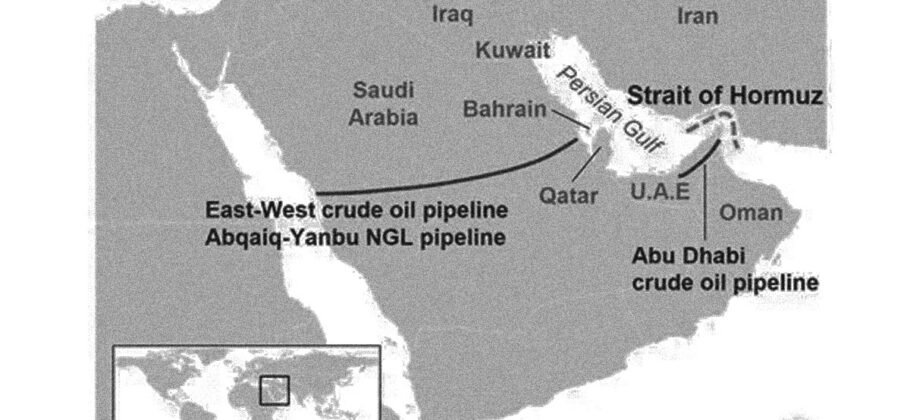
The Strait of Hormuz is widely considered the most important energy chokepoint in the world. Located between Iran and Oman, it connects the Persian Gulf to global shipping lanes. The channel is deep and wide enough to accommodate the largest oil tankers, and it handles enormous volumes of energy supplies.
In 2024, about 20 million barrels of oil and petroleum products moved through the strait each day, which equals roughly one fifth of global petroleum consumption. Around one fifth of global liquefied natural gas trade also passes through the corridor, much of it from Qatar, the world’s second largest LNG exporter.
Because there are few alternative export routes, any disruption immediately threatens global supply. Saudi Arabia and the United Arab Emirates operate pipelines that bypass the strait, but analysts estimate only about 2.6 million barrels per day could be rerouted. Most exports from Iraq, Kuwait, and Qatar have no practical alternatives.
If the strait were fully blocked, analysts say most Gulf oil exports would be cut off from world markets almost immediately.
Early Signs of Market Stress
Markets have already begun reacting to the danger. Oil prices reached a seven month high in February as speculation grew that military strikes were coming. With futures markets closed over the weekend, traders had limited pricing signals, but one trading product showed West Texas Intermediate crude more than 8 percent higher.
Shipping companies and analysts say the situation remains extremely uncertain. Several traders said it was too early to predict how markets would open, noting that the next few hours could determine whether disruption continues or worsens.
Even before any physical blockade, geopolitical tension alone had slowed shipments. Monitoring data showed outbound oil flows averaging about 20.4 million barrels per day in February, slightly below previous levels, demonstrating how risk perceptions alone can affect supply.
Why Analysts Are Talking About $100 Oil
Energy experts say the biggest risk is not only a complete shutdown but a prolonged disruption that reduces efficiency across the shipping system. Even limited interference can raise costs and tighten supply.
S&P Global analysts explained the danger clearly, saying, “Hormuz risk is not only about closure but also fleet productivity. If Iran escalates by seizing tankers or using drones to threaten commercial traffic, voyage times and possibly costs for Middle East oil exports would further increase.”
If ships take longer routes, insurance premiums rise, and fewer tankers are available, prices can climb quickly even if some oil still flows.
Historical modeling suggests that sudden loss of Gulf supply could push oil prices sharply higher, which is why some market observers are speculating about prices reaching $100 per barrel if disruption continues.
How Long Before Consumers Feel the Impact
Financial markets usually react before physical shortages appear, but if shipments remain disrupted, the effects could reach consumers quickly. Higher oil prices would likely lead to more expensive gasoline, airline tickets, and transportation costs. Those increases often spread through the economy, raising the price of food and manufactured goods.
Strategic petroleum reserves could help moderate the shock, but analysts say they cannot fully replace Gulf crude supplies and releases take time to organize.
Asian countries would face the largest immediate risks. About 84 percent of the crude and condensate passing through Hormuz goes to Asia, including major buyers such as China, India, Japan, and South Korea. These economies depend heavily on imported energy for electricity and industry.
Inside the Gulf region, governments could also face serious financial pressure if exports stop. Countries such as Iraq and Kuwait rely heavily on oil revenues to fund public spending. If shipments halt and storage fills up, producers may be forced to cut output, losing income quickly.
For now, the situation remains fluid and uncertain. Some vessels are still attempting to transit the strait, but far fewer than normal. Many shipowners are considering canceling voyages entirely under wartime contract clauses, which could tighten tanker supply further and push freight rates higher.
The events unfolding in the Strait of Hormuz highlight how vulnerable the global economy remains to geopolitical conflict in a single narrow waterway. If the disruption continues for days or weeks, the consequences could extend far beyond the Middle East, affecting energy markets, inflation, and economic stability around the world.
FAM Editor: It does appear that the war is going well and should be over quickly with a new government in Iran. But that is not a guarantee.