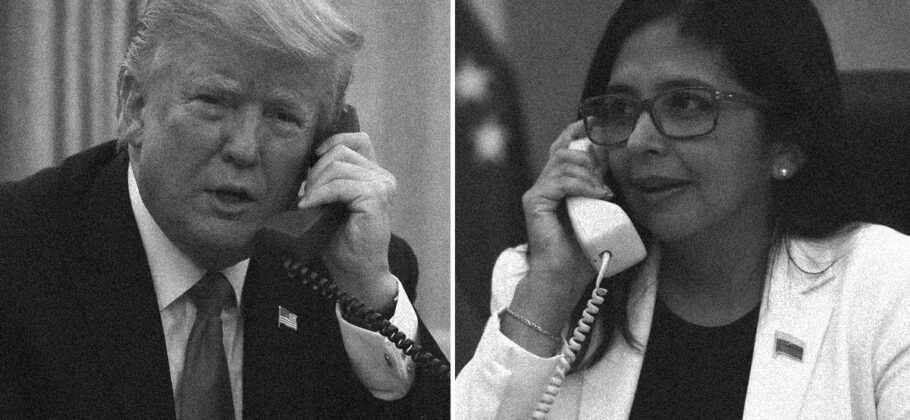
The United States has taken a major step toward reshaping its relationship with Venezuela by lifting sanctions on interim president Delcy Rodríguez. The move, announced by the Trump administration on April 1, 2026, signals a shift from years of economic isolation toward cautious engagement, with potential consequences for global energy markets, U.S. investment, and Venezuela’s political future.
The U.S. Treasury Department removed Rodríguez from its sanctions list, ending restrictions that had previously barred Americans from doing business with her. These sanctions had exposed U.S. individuals and companies to civil or criminal penalties if they engaged with her directly.
This decision effectively opens the door for American companies to negotiate with Venezuela’s leadership, especially in key sectors like oil, mining, and finance. It also comes alongside broader steps, including allowing Venezuela’s state oil company to sell oil directly to U.S. firms and global markets.
Sanctions on Delcy Rodriguez
Rodríguez was originally sanctioned in 2018 during the first Trump administration for her role in supporting the government of Nicolás Maduro. At the time, U.S. officials accused her and other senior figures of helping “maintain power and solidify authoritarian rule” following an election widely viewed as illegitimate.
The sanctions were part of a broader effort to pressure Maduro’s inner circle and force political change in Venezuela. However, the situation shifted dramatically after U.S. forces captured Maduro earlier in 2026, leading to Rodríguez stepping into leadership.
According to the White House, the decision reflects progress in cooperation between the two countries. A spokesperson said the move aims to “promote stability, support economic recovery and advance political reconciliation in Venezuela.”
The Trump administration is pursuing a three-part strategy: stabilize Venezuela’s economy, open access to its vast energy and mineral resources, and eventually move toward democratic elections.
Rodríguez welcomed the decision, calling it “a significant step in the right direction” and expressing hope that more sanctions would soon be lifted to enable “rapid economic development” and stronger bilateral cooperation.
Opportunities in Venezuela
The lifting of sanctions dramatically changes the landscape for imports, exports, and investment:
American companies can now legally engage with Venezuela’s leadership without fear of penalties.
Oil exports are expected to increase as U.S. firms explore partnerships with Venezuela’s energy sector.
Mining and resource development may expand as investors look at Venezuela’s untapped reserves.
Diplomatic ties are improving, with Venezuela reopening its embassy in Washington after years of closure.
Executives from dozens of U.S. energy and mining companies have already traveled to Caracas to explore opportunities, signaling strong early interest.
Potential Economic Impact
The economic implications could be significant. Venezuela holds some of the largest oil reserves in the world, and increased production could affect global supply and pricing. For Venezuela, new investment could help rebuild a struggling economy and restore basic infrastructure.
Experts say this is only an initial step. Geoff Ramsey of the Atlantic Council described the move as “another baby step toward full normalization,” noting that it could encourage other sanctioned officials to seek similar relief.
However, uncertainty remains about whether these economic gains will translate into lasting political reform.
President Donald Trump has repeatedly praised Rodríguez, calling her “terrific” and “very good to deal with,” and has pointed to Venezuela as a foreign policy success.
His administration appears focused on pragmatic engagement, prioritizing economic cooperation and stability over immediate political demands.
Not everyone is fully convinced. Critics question whether the U.S. is receiving enough in return, especially regarding democratic reforms.
Marco Rubio emphasized that the process must eventually lead to elections, stating, “It’s not forever, but we have to be patient,” and adding that he feels “very good about the progress we’ve made in Venezuela in three months.”
Meanwhile, opposition leader María Corina Machado has continued to push for elections, warning that the interim government must not be allowed to consolidate power without a democratic mandate.