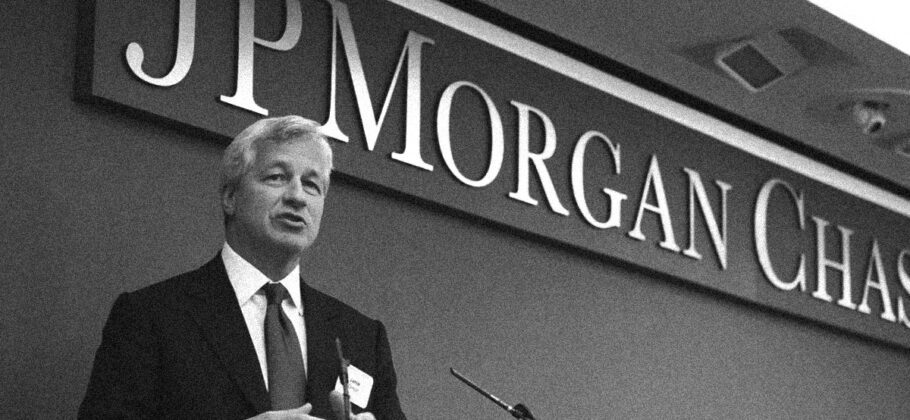
A growing chorus of concern is emerging from the highest levels of American finance, and at its center is Jamie Dimon, the longtime CEO of JPMorgan Chase. In his latest annual letter to shareholders, Dimon delivered a blunt warning: New York City is at risk of losing its competitive edge, and businesses are already leaving.
His message is not theoretical. It is happening now.
Dimon’s Core Warning: “A Large Exodus” Is Already Underway
Dimon made it clear that the issue is not politics or loyalty. It is economics and competitiveness.
“Cities like individuals, companies, and countries need to compete,” he wrote. “No matter who you are, you need to deal with reality and the truth.”
That truth, according to Dimon, is stark. New York has some of the highest taxes in the country, both for corporations and individuals. He emphasized that “higher taxes mean lower returns on capital and less competitiveness by their nature.”
The result is predictable. Businesses and wealthy individuals are leaving.
“You can already see a fairly large exodus of people and jobs out of some states with high taxes and high expenses,” Dimon said.
This is not speculation. It is already visible in the data.
The Mamdani Tax Plan and Why Dimon Says It Is a Problem
At the center of the debate is New York City Mayor Zohran Mamdani and his proposed tax increases.
Mamdani has pushed for a major shift in the city’s tax structure, including:
- Raising the corporate tax rate from 7.25 percent to 11.5 percent
- Adding a 2 percent personal income tax increase on individuals earning over $1 million
These proposals are designed to address a projected budget gap that could reach $12 billion within two years. However, Dimon and other business leaders argue that the approach could backfire.
“Companies need to remain competitive in this very tough, fast-moving world,” Dimon warned.
He has been even more direct in public comments, criticizing what he described as ideological thinking disconnected from economic reality.
Importantly, these tax hikes are not yet finalized. They require approval from New York Governor Kathy Hochul, meaning the final outcome remains uncertain. But the mere expectation of higher taxes is already influencing decisions.
Businesses Voting With Their Feet
The numbers reinforce Dimon’s concerns.
- Nearly 5,000 businesses have left New York in the past year alone
- A net loss of about 8,400 employers was recorded in a single quarter
- Earlier data shows hundreds of companies relocating and taking tens of billions in income with them
The reasons are consistent:
- High taxes
- Heavy regulation
- Rising operating costs
- Expensive commercial real estate
Many of these businesses are heading to Texas and Florida, where taxes are lower and regulatory environments are more favorable.
Major Companies Shifting South
This is not just small businesses. Some of the most powerful firms in finance are restructuring their footprints.
Examples include:
- Elliott Management moving significant operations to Florida
- AllianceBernstein shifting key functions out of New York
- Citadel expanding aggressively in Florida
- Goldman Sachs building a massive campus in Dallas
- Wells Fargo relocating major divisions to Florida
- Apollo Global Management exploring a second headquarters in the Sun Belt
Even JPMorgan itself is part of this trend.
Dimon revealed that the bank has reduced its New York workforce from 30,000 a decade ago to 24,000 today, while increasing its Texas workforce from 26,000 to 32,000.
“This trend will likely continue,” he said. Dimon pointed to a historical precedent that should not be ignored.
In the 1970s, nearly half of the 125 Fortune 500 companies based in New York left the city due to rising costs, taxes, and labor pressures. He warned that similar conditions today could lead to another major decline.
“That can sometimes spell a disaster for a city,” he noted.
The Real Estate Question: Stable Today, Risky Tomorrow
For now, New York’s real estate market is not collapsing. The city still benefits from its global financial status, deep talent pool, and infrastructure.
However, the underlying trend raises serious concerns.
As businesses leave or reduce their footprint:
- Demand for commercial office space could weaken
- High-end real estate tied to financial employment may soften
- Supporting industries like legal services, consulting, and retail could feel ripple effects
The concern is not immediate collapse. It is gradual erosion.
As the text makes clear, financial ecosystems are highly sensitive to perception. Once the idea takes hold that a city is losing its edge, it can trigger a chain reaction. Companies begin reassessing, and departures accelerate.
The Bigger Picture: A Shift in Financial Power
Reports suggest that as much as $500 billion in capital may already be moving out of New York . While not all of this represents permanent departure, it signals a broader shift.
This is not just about one mayor or one policy. It reflects mounting pressures:
- Taxation
- Regulation
- Cost structures
- Competition from other regions
New York remains a dominant financial center, but it is no longer unchallenged.
Conclusion: A Tipping Point Approaches
Jamie Dimon’s warning is not ideological. It is rooted in business reality.
New York still has enormous advantages, including talent, infrastructure, and global influence. But those advantages are being tested.
If tax increases move forward and costs continue to rise, the current trickle of departures could become something much larger.
As one observer put it, what was once a slow shift “is going to turn into a flood.”