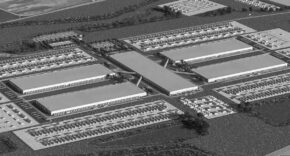
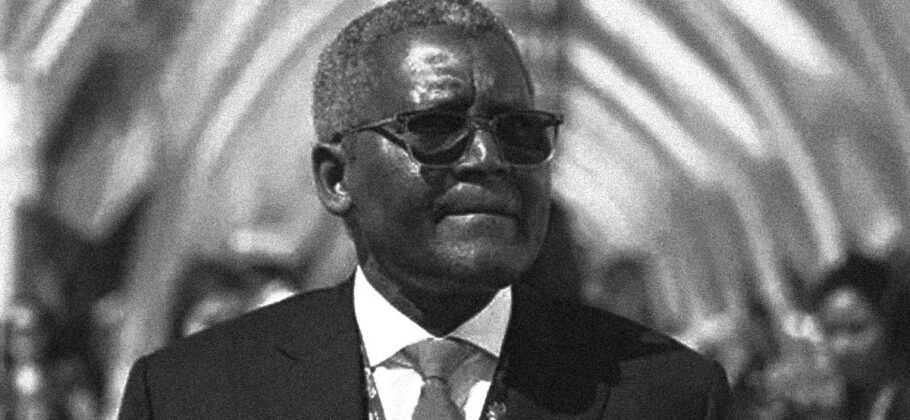
Africa’s richest man, Aliko Dangote, is now setting his sights on one of the most ambitious infrastructure projects in East African history. After successfully building the massive Dangote refinery in Nigeria, the billionaire industrialist says he wants to replicate the project in East Africa with a refinery capable of processing 650,000 barrels of oil per day.
The proposed refinery would instantly become one of the largest industrial projects on the African continent and could fundamentally change how East Africa handles energy, fuel imports, and economic growth.
A Massive Refinery for East Africa
Dangote indicated that Kenya’s coastal city of Mombasa is currently his preferred location for the project because of its large and deep port facilities. According to Reuters, Dangote explained, “I’m leaning more towards Mombasa because Mombasa has a much larger, deeper port.”
At the same time, regional leaders are also discussing Tanzania’s port city of Tanga as a possible site. Kenyan President William Ruto said East African countries are discussing a joint refinery project in Tanga that would be modeled after Dangote’s Nigerian refinery.
The proposed refinery would not just serve one nation. Instead, it would potentially process oil from multiple East African countries including Kenya, Uganda, South Sudan, and the Democratic Republic of the Congo. Ruto explained that the refinery “is going to take on board the oil from DRC, the oil from Kenya, the oil from South Sudan, and the oil from Uganda.”
That kind of regional cooperation is significant because infrastructure projects of this size are extremely difficult to finance in Africa. Large industrial developments often face challenges involving political risk, unstable currencies, insufficient infrastructure, and limited access to affordable financing. Yet energy remains one of the most important drivers of economic development. Reliable fuel supplies can strengthen transportation, manufacturing, agriculture, and industrial production across entire regions.
The Enormous Cost of the Project
Dangote estimated the refinery would cost between $15 billion and $17 billion to construct. That is an enormous amount of money even by global standards, especially for a developing region.
Still, Dangote believes the investment could transform East Africa’s economy in the same way his Nigerian refinery is beginning to reshape West Africa’s energy sector.
At an infrastructure financing conference in Nairobi, Dangote pledged that his company would move forward if governments in the region fully supported the plan. “My commitment today here is that if we agree with the three or four governments here about the refinery, we will lead and we’ll make sure that refinery is built within the next four or five years,” he said.
The project would require cooperation between several governments, international investors, engineers, shipping companies, and energy firms. It could also attract major foreign investment into East Africa while creating thousands of construction and industrial jobs.
Why the Refinery Matters
Right now, East Africa imports nearly all of its refined petroleum products, mostly from the Middle East. That leaves countries vulnerable to international conflicts, shipping disruptions, and sudden spikes in fuel prices.
The recent instability connected to the Iran conflict demonstrated how dangerous that dependence can become. When supply chains are disrupted, fuel prices can rise quickly, damaging economies and increasing costs for businesses and consumers alike.
A regional refinery would give East Africa greater energy independence and more control over its own economic future. Instead of exporting crude oil and then buying back expensive refined fuel from overseas, African nations could refine their own petroleum products closer to home. That change could become a major growth factor for the continent.
Energy is wealth. Affordable and reliable fuel supports nearly every part of modern economic activity. Industrialization becomes easier when transportation costs fall and local industries gain dependable access to fuel supplies.
The project could also help Africa retain more of the economic value generated by its own natural resources rather than sending those profits abroad.
A Bigger Vision for African Industry
Dangote’s ambitions go beyond oil refining. During the Nairobi conference, he also announced plans to establish roughly 20 fertilizer blending plants across Africa by 2028 in an effort to meet much of the continent’s agricultural needs.
His broader vision reflects a growing belief among many African business leaders that the continent must invest heavily in industrial infrastructure if it wants to achieve long term economic independence and sustained growth.
Building massive projects in Africa is never easy. Financing challenges, political negotiations, and infrastructure limitations can delay or derail even the most promising plans. But projects like this refinery demonstrate that African industrial development is beginning to operate on a far larger scale than in previous decades.
If successful, the refinery could become one of the most important economic projects in modern East African history.
| Region | Approximate Total Refining Capacity | Notes |
|---|---|---|
| Asia (excluding Middle East) | ~38–40 million bpd | Dominated by China, India, South Korea, Japan, and Singapore |
| North America | ~23–25 million bpd | Led overwhelmingly by the United States |
| Europe | ~15–17 million bpd | Mature but slowly shrinking refining sector |
| Middle East | ~10–12 million bpd | Rapidly expanding export-oriented mega refineries |
| South America | ~6–7 million bpd | Mainly Brazil and Venezuela |
| Africa | ~3–4 million bpd | Very underdeveloped relative to oil reserves |
| Oceania | ~0.5–0.8 million bpd | Primarily Australia and New Zealand |
| Refinery | Country | Location | Estimated Current Production | Status |
|---|---|---|---|---|
| Dangote Refinery | Nigeria | Lagos/Lekki | ~500,000–650,000 bpd | Rapidly ramping, largely operational |
| Skikda Refinery | Algeria | Skikda | ~300,000+ bpd | Operational |
| MIDOR Refinery | Egypt | Alexandria | ~160,000 bpd | Operational |
| Mostorod Refinery | Egypt | Cairo/Mostorod | ~140,000–150,000 bpd | Operational |
| El Nasr Refinery | Egypt | Suez | ~130,000–140,000 bpd | Operational |
| Ras Lanuf Refinery | Libya | Ras Lanuf | ~120,000–220,000 bpd | Intermittent due to instability |
| SAPREF Refinery | South Africa | Durban | ~110,000–180,000 bpd | Partially active/recovering |
| Port Harcourt Refinery | Nigeria | Port Harcourt | ~100,000–140,000 bpd | Recently restarted, variable |
| Zawiya Refinery | Libya | Zawiya | ~100,000–120,000 bpd | Operational but unstable |
| Natref Refinery | South Africa | Sasolburg | ~100,000 bpd | Operational |
| Secunda CTL Complex | South Africa | Secunda | ~90,000–160,000 bpd equivalent | Operational |
| Warri Refinery | Nigeria | Warri | Very limited actual output | Restart attempts underway |
| SIR Refinery | Côte d’Ivoire | Abidjan | ~75,000–85,000 bpd | Operational |
| Arzew Refinery | Algeria | Arzew | ~70,000–90,000 bpd | Operational |
| Luanda Refinery | Angola | Luanda | ~60,000–65,000 bpd | Operational |
| SONARA Refinery | Cameroon | Limbe | ~45,000 bpd | Rebuilding after fire damage |
| Tema Oil Refinery | Ghana | Tema | Often near-zero or intermittent | Operational problems |
| Assiut Refinery | Egypt | Assiut | ~40,000–70,000 bpd | Operational |
| Algiers/Sidi Rezine | Algeria | Algiers | ~40,000–55,000 bpd | Operational |
| STIR Refinery | Tunisia | Bizerte | ~30,000 bpd | Operational |
| SAR Refinery | Senegal | Dakar | ~25,000–27,000 bpd | Operational |
| SOGARA Refinery | Gabon | Port-Gentil | ~20,000–24,000 bpd | Operational |
| CORAF Refinery | Congo | Pointe-Noire | ~20,000 bpd | Operational |
| Zinder Refinery | Niger | Zinder | ~20,000 bpd | Operational |
| Djarmaya Refinery | Chad | N’Djamena | ~20,000 bpd | Operational |
| Cabinda Refinery | Angola | Cabinda | ~10,000–30,000 bpd | Early-stage operations |
| Khartoum Refinery | Sudan | Khartoum | Minimal or offline | Damaged by civil war |
| Astron Refinery | South Africa | Cape Town | Mostly offline/intermittent | Recovering from shutdowns |
| Kaduna Refinery | Nigeria | Kaduna | Essentially inactive | Long-term dysfunction |
| Indeni Refinery | Zambia | Ndola | Very limited production | Mostly inactive |
| Tobruk Refinery | Libya | Tobruk | Minimal intermittent output | Small-scale/intermittent |
| SAMIR Refinery | Morocco | Mohammedia | Near zero | Mostly inactive since 2015 |
| Lobito Refinery | Angola | Lobito | 0 bpd | Under construction/planned |