
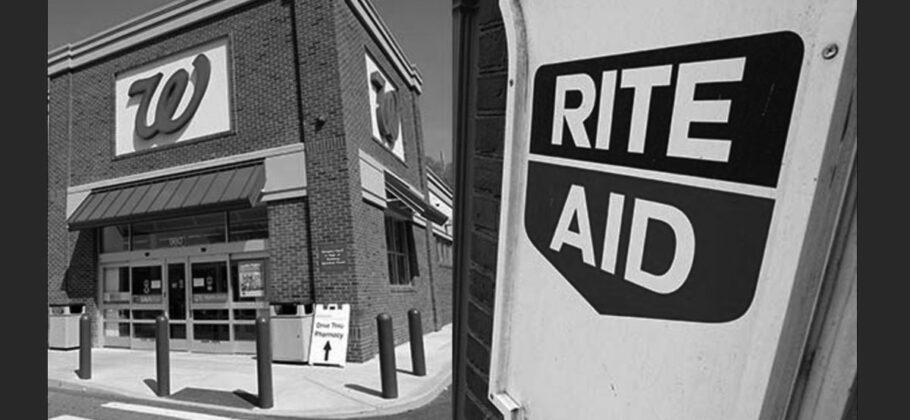
Walmart is making a calculated new move in the war against Amazon, and the battleground is not inside giant Supercenters. Instead, the company is quietly taking over vacant drug stores and other abandoned retail locations and transforming them into fast delivery depots designed to get groceries and household goods to customers in as little as 30 minutes.
The strategy reflects how retail competition has changed in America. The fight is no longer just about who has the lowest prices or the biggest stores. It is now about who can deliver products to consumers the fastest, most efficiently, and with the least friction.
Walmart appears to believe that old drug stores may be one of the perfect tools for winning that fight.
Why Former Drug Stores Make Sense
Walmart has opened at least three “Walmart Depot” locations in Texas, New Jersey, and Arkansas over the past year, according to public filings and reporting cited in the provided material. Proposed future locations include former Rite Aid stores in New York and California, a former Walgreens location in Arkansas, and even a former Goodwill store in Virginia.
These buildings are not being turned into traditional retail stores. Customers cannot walk in and shop. Instead, they function as compact fulfillment centers for Walmart’s Spark delivery drivers. Most locations are about 20,000 square feet, far smaller than Walmart’s typical 180,000 square foot Supercenters.
That smaller size is one of the biggest advantages.
Drug stores were originally built in densely populated residential areas with strong demographics and easy road access. In many cases, years of market research had already identified these locations as ideal retail spots long before Walmart arrived. Walmart is effectively inheriting those carefully selected locations at a time when chains like Rite Aid, Walgreens, and CVS are closing stores due to financial pressure and changing shopping habits.
Real estate brokers quoted in the reports noted that former pharmacy properties are becoming increasingly attractive because they are already located close to residential neighborhoods. That makes them ideal for rapid delivery operations.
In many ways, Walmart is recycling failed retail infrastructure into a modern logistics network.
What Walmart Is Trying to Achieve
The main goal is speed.
Walmart already uses its more than 4,600 U.S. stores as fulfillment hubs and says it can deliver to 95% of Americans within three hours. But large Supercenters are not always efficient for delivery workers.
Spark driver Angel Rodriguez explained the problem clearly in comments quoted by The U.S. Sun.
“I try to stay away from the stores now, because the stores are so big. Grabbing five items could take 25 minutes, versus five items here takes five minutes. So I’m getting more work done in a short amount of time.”
That difference matters enormously in the economics of same day delivery.
Rather than forcing drivers to navigate huge stores crowded with shoppers, Walmart’s new depots stock only high demand items and are designed specifically for rapid pickup. Some locations have already added refrigeration systems and storage racks to support grocery fulfillment.
Jason Klipa, Walmart’s government relations director, described the concept during a public hearing in New York.
“It effectively just looks like a small grocery store or a drugstore,” Klipa said. “This allows them to come in, pick an order, not clog the store up and get the delivery out as quick as they can to the customer.”
The company has even suggested that some facilities could support deliveries in as little as 30 minutes.
The Amazon vs. Walmart Arms Race
This move is part of a much larger battle between the two biggest forces in modern retail.
As of early 2026, Amazon reportedly surpassed Walmart in annual revenue, generating approximately $717 billion compared to Walmart’s $713 billion. Amazon dominates online commerce, while Walmart remains the king of physical retail with more than 10,000 stores globally.
Business Insider described the current situation as “the race is on to see if Walmart can become Amazon before Amazon becomes Walmart.”
Both companies are increasingly borrowing from each other’s playbooks.
Amazon is moving deeper into grocery sales through Whole Foods and Amazon Fresh while expanding 30 minute delivery service in dozens of cities. Walmart, meanwhile, is pushing aggressively into e-commerce, marketplace sales, automation, and ultra fast delivery infrastructure.
Walmart says its U.S. e-commerce business now exceeds $100 billion annually and is growing more than 20% per year.
The grocery market is especially important because groceries generate frequent repeat shopping. Walmart already dominates that space as America’s largest grocer. About 90% of Americans reportedly live within 10 miles of a Walmart location, giving the company a massive geographic advantage.
Amazon, however, still holds the edge in product selection and online shopping infrastructure.
This has created a strange convergence where both giants are evolving toward the same middle ground. Walmart wants Amazon’s digital dominance. Amazon wants Walmart’s local physical reach.
How Other Retailers Compare
Other retailers are still competing, but most are operating on a smaller scale.
Target remains strong in general merchandise and store experience, while Costco dominates warehouse retail and bulk purchasing. Grocery chains such as Kroger continue investing in delivery partnerships and automation. But none currently combine Walmart’s physical footprint with Amazon’s digital scale.
Meanwhile, pharmacy chains are retreating rather than expanding. Rite Aid has closed numerous locations, and Walgreens and CVS have been reducing store counts after years of margin pressure and reimbursement challenges.
Ironically, those closures may now help Walmart grow even stronger.
There are also growing concerns about what this kind of retail consolidation could mean for the future of competition in America. The days of the traditional mom and pop shop are already fading fast, and even many established retail chains are struggling to maintain profits without periodically charging extremely high prices on certain products. One shopper recently described going to The Home Depot looking for a replacement battery for a cordless drill and finding a price near $200. The same battery was reportedly around $70 at Walmart, he finally ordered an equivalent version through Amazon cost roughly $40. His initial trip to Home Depot was largely inertia, and as an older person he was not as comfortable with Amazon. But times are chaning.
Stories like that help explain why Walmart and Amazon continue gaining market share. Their enormous scale, supply chain leverage, and logistics networks allow them to pressure competitors on pricing in ways that smaller retailers often cannot survive. The fear among some analysts and consumers is that this intense battle between two giants may ultimately eliminate much of the remaining competition, leaving fewer alternatives once the dust settles.
Will Consumers Benefit?
For consumers, the competition is already producing major benefits.
Faster delivery times, lower prices, better mobile apps, same day grocery delivery, and expanded membership programs are all direct results of the Amazon versus Walmart rivalry.
Amazon Prime reportedly has roughly 200 million global members, while Walmart+ has grown to more than 26.5 million members by offering fuel discounts, free shipping, and early access to deals.
Analysts increasingly view retail not as a traditional store business, but as a technology and logistics business. Both companies are investing heavily in artificial intelligence, automated warehouses, advertising platforms, and digital pricing systems.
For now, consumers appear to be the biggest winners.
The transformation of empty drug stores into high speed delivery depots may look simple on the surface, but it represents something much larger. Walmart is building a distributed logistics network hidden inside neighborhoods across America, using locations that were already proven to work for retail traffic decades ago.
It is a highly calculated move, and one that shows just how serious the battle with Amazon has become.